
 The performing arts have a crucial role in contemporary society as an inoculation against the encroachment of screens and apps into every part of our lives. Like books and other reading materials, live performances of music and dance inspire storytelling. Entering the performing arts venue, navigating a variety of social exchanges, and ultimately seating oneself in the space for a presentation that many will share unites the dual purposes of fulfilling a personal experience with collective participation.
Today’s world is a digital world. Nearly everyone carries a smart phone; a powerful computer on our person at all times, with laptops and tablets that talk to our smart phones never far from reach. At home, additional devices connect to our phones to organize our lives— thermostats, fridges, doorbells, lights. Ordinary appliances have become “smart”, claiming to make our lives simpler and allow us more time for us.
Theoretically, outsourcing routine tasks to technology should reveal a cleared path to creativity and self-actualization, with stops for self-care and quality time with loved ones along the way. In reality, even as we have banished boredom and loneliness, seeking to optimize every feature of life, our minds have never been busier.
It is not immediately obvious what has been lost, or its cost. Screens keep us engaged with the promise of endless entertainment or a sense of being productive. Social media apps prompt any combination of admiration, validation, comparison, outrage, and judgement by hijacking the neurotransmitter dopamine in our brains, which is responsible for rewarding desirable behaviour. The problem is that many of our actions have now dwindled to reactions, as reliance on executive function, especially in social situations, has declined.
Having an extremely limited and sometimes singular portal for these experiences is the new normal. In-person interactions with other people feel laborious because social muscles which took millennia to evolve have atrophied into a series of likes and shares. However, by going to a live event, which will involve dozens of mini social transactions, we get to practice what is already hardwired into being human: the ability to read facial expressions and the skill of listening before responding.
In today’s highly derivative cultural world, classical music, which is often abstract and reliant on large musical forms to convey its message, may have a particularly tenuous foothold. Sitting through a forty-minute symphony has never been more boring, nor has it been more critical. Listening to music, in the presence of others yet alone with our thoughts, is a doorway to cultivate a rich inner life; the music serves as a backdrop for layering our memories.
Our attention directed away from our screens, letting our minds wander as live music enters our consciousness, we have finally found a tiny slice of freedom.
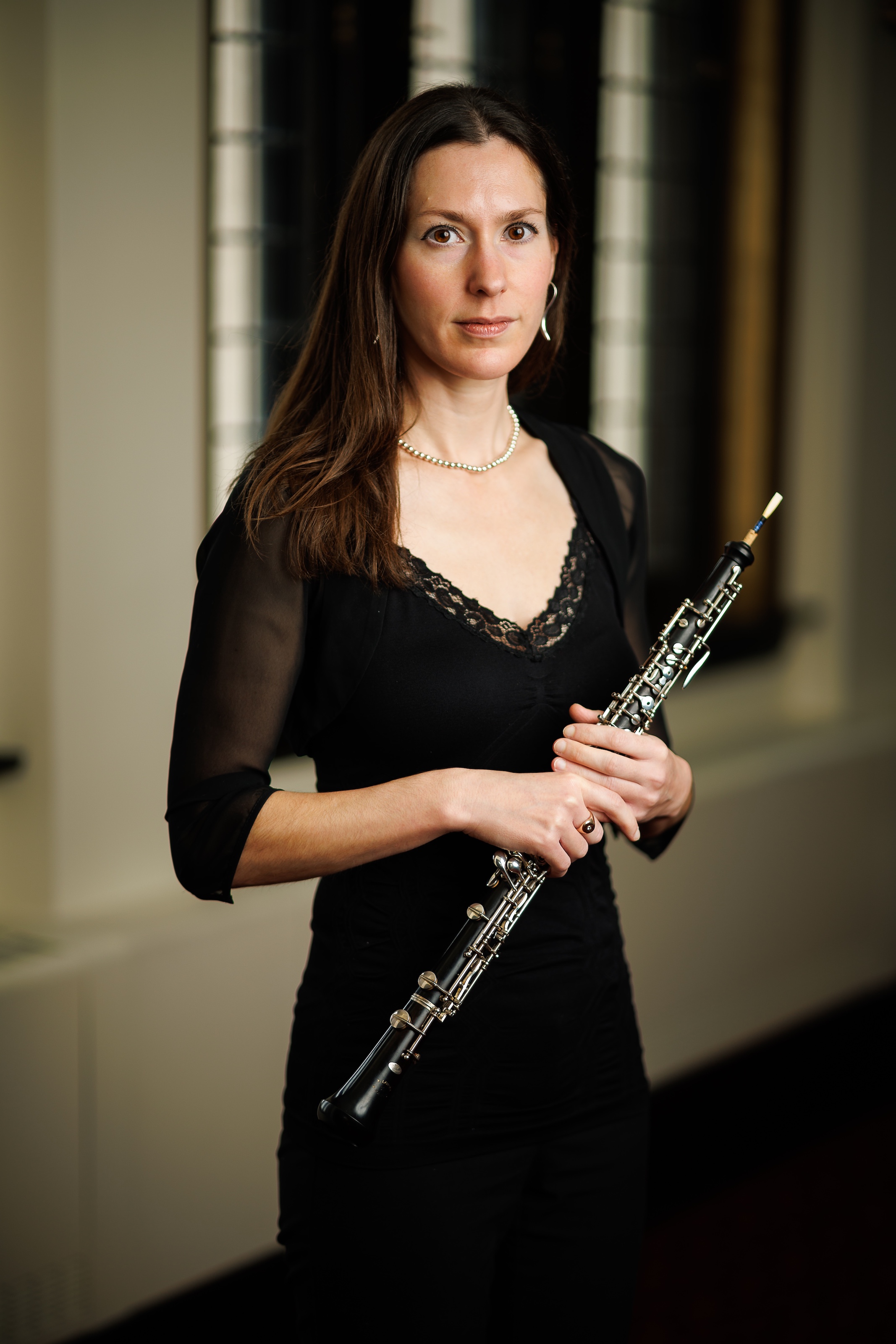
- Tamsin Lorraine Johnston, Principal Oboe, Regina Symphony Orchestra